Pages

.

Showing posts with label psychoanalysis. Show all posts

How To Find A Good Psychotherapist

I'm Blogging for Mental Health.


It's a difficult, yet brave and courageous moment when someone makes the decision to pursue mental health therapy. More difficult than the decision to go to therapy is the decision of who to choose as a therapist.

So, how does someone find a good psychotherapist?


Types of Therapists
First, it is important to think about the type of therapist you think is best for your presenting symptoms and issues. There are many kinds of mental health therapists, but sometimes understanding "who does what" can be confusing. Here is a list to help identify the specialties and degrees therapists can hold.

Psychologists
In the United States, Doctors of Philosophy (Ph.D.), Doctors of Psychology (Psy.D.), or Doctors of Education (Ed.D.) must complete at least four years of post graduate school, however, only those who have been licensed can call themselves Psychologists. Licensed practicing psychologists are specifically trained in the mind and behavior as well as diagnosis, assessment and treatment of mental, emotional, and behavioral disorders. The treatment provided is "talk therapy". It is important to know that not all psychologists are experienced therapists. Some specialize in areas such as statistical research or industrial psychology, and may have little experience treating people. Therefore, it is important to inquire about the caliber of clinical experiences. Generally speaking, most psychologists do not prescribe medication.

Social Workers

Clinical Social Workers (C.S.W.) usually have earned at least a Masters' Degree, which is two years of graduate school, and some Social Workers obtain a doctoral degree (D.S.W. or Ph.D.). Clinical Social Workers credentials may vary by state, but these are the most common: B.S.W. (Bachelor's of Social Work), M.S.W. (Master's of Social Work), A.C.S.W. (Academy of Certified Social Workers), or D.C.S.W. (Diplomate of Clinical Social Work). Although there are exceptions, most licensed clinical social workers generally have an "L" in front of their degree (L.C.S.W.) communicating that they are a Licensed Clinical Social Worker. Clinical Social Workers also receive training in the prevention, diagnosis, and treatment of mental, behavioral, and emotional disorders. Their goal is to enhance and maintain physical, psychological, and social functioning in who they treat.

Psychiatrists
A Psychiatrist completes a medical degree (M.D.) like any other physician, followed by a four-year psychiatry specialty. Psychiatrists prescribe medication yet sometimes do psychotherapy with patients. Psychiatrists, unlike Psychologists, have the background and experience to understand how the body and the mind as a whole react when psychiatric medication is given, and have extensively studied the total body including brain biochemistry, tissues, glands, and organs, leading to a fundamental understanding of how these all interact and react to the patient's environment in mental health and mental illness.

Marriage Family Therapists & Professional Counselors
Licensed Marriage and Family Therapists (L.M.F.T.), and Professional Counselors (L.P.C.) usually have two years of graduate school and have earned at least a Masters' Degree such as: M.A. (Master of Arts), M.S. (Master of Science) or M.Ed. (Master of Education). Marriage and Family Therapists have additional specialized training in the area of family therapy.

Certified Counselors
Certified Counselors are typically trained in drug or alcohol abuse specialties. A Certified Addiction Counselor (C.A.C.) or a Certified Alcohol Counselor, (C.A.C.) may have a I, II, or III added to their degree signifying the level of training in counseling (CAC-I, for example). A C.A.C. Counselor may or may not have a master's degree. Counselors are trained for supportive therapy. C.A.C's work within the field of alcoholism and substance abuse, providing education, consultation, counseling, aftercare, recovery and advocacy.

Religious/Theology/Pastoral Counselors
These are counselors who are clergy, pastors or who have a Master of Divinity (M.Div.) degree, or a Doctorate in Theology (Th.D.) from a seminary or rabbinical school, with additional training in therapy. These spiritual counselors are trained in both psychology and theology and thus can address psychological, religious and spiritual issues.

Counseling Nurses
Psychiatric Nurses and Nurse Practitioners comprise a growing segment of mental health treatment professionals. They display the credentials R.N. (Registered Nurse), R.N.P. (Registered Nurse Practitioner) or M.S.N. (Masters of Science in Nursing). A Psychiatric Nurse is a registered nurse with a master's degree who has been trained in individual, group, and/or family psychotherapy. The Psychiatric Nurse and the Nurse Practitioner view individuals from a holistic perspective, taking into account both physical and mental health needs while focusing on human behavior.


From Word of Mouth To Yellow Pages
Now that you know the kind of therapists with which you wish to work, how do you choose one?Here are a few ways that can provide leads to a good therapist.

Word of mouth: Asking a friend or relative that you trust can be a great way of finding a reliable therapist. When a clinician is highly regarded, there is usually a buzz in the community about him or her.

Professional Referrals: Contacting your general physician, or inquiring with school guidance and special service staff if you are looking for someone to work with your child are good ideas. Contacting local psychological, psychiatric or counseling organizations can be very helpful in pointing you in a direction as well.

Online Resources: Many professional organizations and grassroots organizations offer referral resources. There are also mental health websites like Psychology Today's Therapist Directory that can help you narrow down a search.

Insurance Company: If you have an insurance company, another suggestion is to call them directly and ask them to give you a few names of therapists in your area, and ones that specialize in the disorders or issues with which you are experiencing.

Religious Organizations: Many churches and temples have outreach programs where the person in charge can help you find a therapist.

Yellow Pages: Many times I get calls from people who look me up in the Yellow Pages. With nowhere else to turn, people cold-call with the hopes of finding a good therapist. This experience can be frustrating and may lead you down a bumpy road of contacting therapists who do not specialize in what you need. If possible, try one of the other strategies listed above to help you find a good therapist.


The Initial Phone Call
Once you have a few names, find the time to call each one and talk on the phone with him or her. You can get a great feel for a professional during this informal chat. If you make a connection on the phone, arrange for an appointment to consult with the therapist. I call this "the meet and greet" consult where I get to meet the potential patient, assess the symptoms and issues and make sure that my training and expertise are appropriate for the necessary treatment. This is a time where the potential patient gets to know me as well, how I will work and also learns about my approach to treatment and the parameters of therapy. Though comfort and connection are necessary factors, so too are making sure that the therapist of your choice is educated, seasoned and a specialist in what you are seeking.

Questions to Ask: Most therapists will welcome the opportunity to answer any questions that you may have. Here are some of the most important ones to consider:

1. What is your professional training and degree?

2. How much specialized training and experience have you had with what I am seeking help for?

3. What theoretical school of thought do you follow?

4. How long are the sessions?

5. What is the cost of each session?

5. How does insurance work with mental health therapy?

6. What is your policy on cancelled appointments?

7. Have you been in therapy yourself? If so, how long?

8. Is it possible to reach you after hours in the event of an emergency or crisis? If so, how?

9. Do you receive regular supervision on your cases or belong to a peer supervision group?

10. What professional organizations do you belong to?


Good Therapy
Once these bases are all covered, and you settle into treatment, you should slowly begin to feel an expansion within yourself. Your awareness will widen, your feelings may swell, and you may find yourself thinking in new ways about your situations and life experiences.

Therapy may be tough on occasions, but in time, you should start learning techniques to help change, shift or remedy symptoms. That's how the arc of good therapy progresses. Last, but not least, always, ALWAYS, be sure that the professional you choose to work with is a licensed mental health practitioner.


reade more... Résuméabuiyad

How to Find A Good Psychotherapist


It is a difficult, yet brave and courageous moment when someone makes the decision to pursue mental health therapy. But more difficult than the decision to go to therapy is the decision of who to go to for therapy.

So, how does someone find a good therapist?

Types of Therapists
First, it's important to think about the type of therapist you think is best for your presenting symptoms and issues. There are many kinds of mental health therapists, but sometimes understanding "who does what" can be confusing. Here is a list to help identify the specialties and degrees of therapists.

Psychologists are generally Doctors of Philosophy (Ph.D.), Doctors of Psychology (Psy.D.), or Doctors of Education (Ed.D.) who must complete at least four years of post graduate school, however, only those who have been licensed can call themselves Psychologists. Licensed practicing psychologists are specifically trained in the mind and behavior as well as diagnosis, assessment and treatment of mental, emotional, and behavioral disorders. The treatment provided is "talk therapy". It is important to know that not all psychologists are experienced therapists. Some specialize in areas such as statistical research or industrial psychology, and may have little experience treating people. Therefore, it is important to inquire about the caliber of clinical experiences. Psychologists do not prescribe medication.

Clinical Social Workers (C.S.W.) usually have earned at least a Masters' Degree, which is two years of graduate school, and some Social Workers obtain a doctoral degree (D.S.W.) . Clinical Social Workers credentials may vary by state, but these are the most common: B.S.W. (Bachelor's of Social Work), M.S.W. (Master's of Social Work), A.C.S.W. (Academy of Certified Social Workers), or D.C.S.W. (Diplomate of Clinical Social Work). Although there are exceptions, most licensed clinical social workers generally have an "L" in front of their degree (L.C.S.W.) communicating that they are a Licensed Clinical Social Worker. Clinical Social Workers also receive training in the prevention, diagnosis, and treatment of mental, behavioral, and emotional disorders. Their goal is to enhance and maintain physical, psychological, and social functioning in who they treat.

Psychiatrists (M.D.) complete a medical degree like any other physician, followed by a four-year psychiatry specialty. Psychiatrists prescribe medication yet sometimes do psychotherapy with patients. Psychiatrists, unlike Psychologists, have the background and experience to understand how the body and the mind as a whole react when psychiatric medication is given, and have extensively studied the total body including brain biochemistry, tissues, glands, and organs, leading to a fundamental understanding of how these all interact and react to the patient's environment in mental health and mental illness.

Licensed Marriage Family Therapists (L.M.F.T.) and Professional Counselors (L.P.C.) usually have two years of graduate school and have earned at least a Masters' Degree such as: M.A. (Master of Arts), M.S. (Master of Science) or M.Ed. (Master of Education). Marriage and Family Therapists have additional specialized training in the area of family therapy.

Certified Counselors and Mental Health Counselors are typically trained in drug or alcohol abuse specialties. A Certified Addiction Counselor (C.A.C.) or a Certified Alcohol Counselor, (C.A.C.) may have a I, II, or III added to their degree signifying the level of training in counseling (CAC-I, for example). A C.A.C. Counselor may or may not have a master's degree. Counselors are trained for supportive therapy. C.A.C's work within the field of alcoholism and substance abuse, providing education, consultation, counseling, aftercare, recovery and advocacy.

Religious/Theology/Pastoral Counselors are counselors who are clergy, pastors or who have a Master of Divinity (M.Div.) degree, or a Doctorate in Theology (Th.D.) from a seminary or rabbinical school, with additional training in therapy. These spiritual counselors are trained in both psychology and theology and thus can address psychological, religious and spiritual issues.

Counseling Nurses, Psychiatric Nurses and Nurse Practitioners comprise a growing segment of mental health treatment professionals. They display the credentials R.N. (Registered Nurse), R.N.P. (Registered Nurse Practitioner) or M.S.N. (Masters of Science in Nursing). A Psychiatric Nurse is a registered nurse with a master's degree who has been trained in individual, group, and/or family psychotherapy. The Psychiatric Nurse and the Nurse Practitioner view individuals from a holistic perspective, taking into account both physical and mental health needs while focusing on human behavior.


From Word of Mouth To Yellow Pages
Now that you know the kind of therapists out there, how do you choose one? Well, here are a few ways to find a good therapist.

1) Word of Mouth: Asking a friend or relative that you trust can be a great way of finding a reliable therapist. When a clinician is highly regarded, there is usually a buzz in the community about him or her.

2) Professional Referrals: Contacting your general physician, or inquiring with school guidance and special service staff if you are looking for someone to work with your child are good ideas. Contacting local psychological, psychiatric or counseling organizations can be very helpful in pointing you in a direction as well.

3) Online Searches: The internet makes searching for a specific therapist easy. Websites like Psychology Today , Good Therapy and Network Therapy and other general search engines take some of the work out of finding a skilled clinician in your area. Just make sure to double check credentials when working this way - and realize that not all therapists may be part of this online directory.

4) Insurance Company: If you have an insurance company, or must work through a managed care group,  call them directly and ask them to give you a few names of therapists in your area, and ones that specialize in the disorders or issues you're experiencing.

5) Church, Temple Faith Based Community: Many churches and temples have outreach programs where the person in charge can help you find a therapist. 

6) Yellow Pages: Many times I get calls from people who look me up in the Yellow Pages. With nowhere else to turn, people cold-call with the hopes of finding a good therapist. This experience can be frustrating and may lead you down a bumpy road of contacting therapists who do not specialize in what you need. If possible, try one of the other strategies listed above to help you find a good therapist.

The Initial Phone Call
Once you have a few names, find the time to call each one and talk on the phone with him or her. You can get a great feel for a professional during this informal chat. If you make a connection on the phone, arrange for an appointment to consult with the therapist. I call this "the meet and greet" consult where I get to meet the potential patient, assess the symptoms and issues and make sure that my training and expertise are appropriate for the necessary treatment. This is a time where the potential patient gets to know me as well, how I'll work, my approach to treatment and the parameters of therapy. Though comfort and connection are necessary factors, so too are making sure that the therapist of your choice is educated, seasoned and a specialist in what you need help with.

Questions to Ask: Most therapists welcome the opportunity to answer any questions that you may have. Here are some of the most important ones to consider:

1. What is your professional training and degree?

2. How much specialized training and experience do you have with what I'm experiencing?

3. What theoretical school or kind of treatment do you practice?

4. How long are the sessions?

5. What is the cost of each session?

5. How does insurance work with mental health therapy?

6. What is your policy on cancelled appointments?

7. Have you been in therapy yourself? If so, how long?

8. Is it possible to reach you after hours in the event of an emergency or crisis? If so, how?

9. Do you receive regular supervision on your cases or belong to a peer supervision group?

10. What professional organizations do you belong to?

Good Therapy
Once these bases are all covered, and you settle into treatment, you should slowly begin to feel better. Your awareness will widen and you will find yourself thinking in new ways about your situations and experiences in life. You'll learn skills and techniques to deal with your unique issues and soon a new you and a new world will unfold before you.


reade more... Résuméabuiyad

Mental Health Blog Party 2011

In honor of the American Psychological Association's Mental Health Blog Party, I'm featuring a post on famous psychologists and their quotes. Enjoy these wise words of wisdom and inspiration.

People are like stained glass windows. They sparkle and shine when the sun's out, but when the darkness sets in, their true beauty is revealed only if there is light within. ~ Elisabeth Kubler-Ross (1926-2004) Swiss-American Psychiatrist.

"Thought is action in rehearsal." ~ Sigmund Freud (1856-1939) Austrian founder of Psychoanalysis.

"Success is a state of mind. If you want success, start thinking of yourself as a success." ~ Dr. Joyce Brothers (1928-) American Psychologist.

"Education is not just the filling of a pail, it is the lighting of a fire." ~ B. F. Skinner (1904-1990) American Psychologist.

"Your vision will become clear only when you look into your heart. Who looks outside, dreams. Who looks inside, awakens." ~ Carl Jung (1875-1961) Swiss Psychiatrist.

"Hate is a product of the unfulfilled life." ~ Erich Fromm (1900-1980) American Psychoanalyst.

"All the art of living lies in a fine mingling of letting go and holding on." ~ Henry Ellis (1859-1939) British Psychologist.

"If you only have a hammer, you tend to see every problem as a nail." ~ Abrahamm Maslow (1908-1970) American Psychologist.

"All of us are much more human than otherwise. " ~Harry Stack Sullivan (1892-1941) American Psychologist.

"Life itself still remains a very effective therapist." ~ Karen Horney (1885-1952) American Psychoanalyst.


reade more... Résuméabuiyad

Understanding Dreams

In the psychological world, dreams are a symbolic representation. They reflect our everyday lives in that they are expressing what has been consciously or unconsciously occupying our minds.

Psychologists often ask the people with whom they are working to bring dreams into session work. These dreams bring vital information to treatment and help highlight conflicts, wishes, traumas or fears. Analyzing a dream does not need to be done with a therapist who is highly skilled in dream analysis.

There are things that you can do to help you find the thread in the fabric of your own dreams.

First: Learn to remember your dreams. Most people can't remember their dreams, or believe that they don't dream at all. The fact is that every night we dream. So, tell yourself that you will remember your dream and invite that possibility before you go to bed each night.

Second: Keep paper and pen by your bed. When you wake up, see if you can jot down aspects of your dream. As you do this, you will get better and better at recording and remembering your dreams.

Third: Look at the themes in your dreams. Once you are awake see if you can find the theme in your dream. Is it a dream about fear? Is it a dream that illustrates a wish? A conflict? Sometimes there can be people you know in your dream or strangers. What do these people represent? Things that don't seem right, are weird or don't make sense are perfectly normal in dreams. The point here is to sense the thread of what is going on. Even names or words that come up in the dream can have great meaning.

Fourth: Link and associate what these themes, objects and people mean to you. Once you have these identified, see how they link to your everyday life - your struggles and your experiences.

Fifth: Don't try too hard or make yourself feel bad if you can't get it. Dream analysis takes patience and creativity. Sometimes I get a dream right away, and then there are times that I don't. But when I finally realize what the theme of my dream is or the issues therein, I always have an "a-ha" moment.


reade more... Résuméabuiyad

Understanding Psychoanalysis

Most people unfamiliar with psychoanalysis get a glimpse of it in caricatured form through movies, television or books.


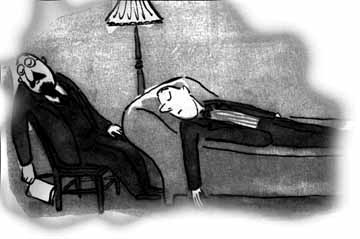
Save for the HBO show In Treatment or the movie Ordinary People, most other mediums present psychoanalysis as a stilted experience, where a couch-lying patient drones on about emotions and feelings to a stoic therapist who is busily taking notes. The other polar extreme is that the analyst, fatigued from his or her patient's narrative, falls asleep.

Misconceptions about psychoanalysis go even further. Health professionals often minimize the mechanics of psychoanalysis, dismissing it as if it were a singular homogenized school of thought. Many are not even aware that research and scientific studies have shown that psychoanalysis is a successful form of psychotherapy.

Psychoanalysis is grounded on the observation that individuals are often unaware of many of the factors that determine their emotions and behavior. Sometimes these factors are slightly out of our awareness (subconscious) or are completely unknown to us (unconscious). Psychoanalytic treatment looks to uncover how these factors effect relationships and behaviors. Together with your analyst, you'd trace them back to their historical origins, learn how they've changed and evolved over time, and develop new skills to better deal with things.


Psychoanalysis has evolved over the last 100 years from Freud's initial model, and has grown to include many different and compelling schools of thought. In fact, Freud might not even recognize the more modern form of psychoanalytic sessions practiced nowadays.

Psychoanalysis is a rich, deep and involved process - and needs to be celebrated as a viable option for the treatment of psychological symptoms.


reade more... Résuméabuiyad

Inception - A Film About The Subconscious


Inception is the cinematic blockbuster from writer/director Christopher Nolan about the power of dream states. I've been waiting a long time to see this finished project, having read about it years ago.

Essentially, the movie is a psychological thriller about the intricacies of the psyche, especially the Alpha state of the subconscious mind. Dreams are validated as real experiences, holding secrets, meaning and power if we can bring them into awareness.

The movie's star, Leonardo DiCaprio, said he prepared for the role by reading Sigmund Freud's "Interpretation of Dreams". Oh, Leo, you could've called me to help you. I would've let you borrow my Interpretation of Dreams collector edition. . . maybe do a session or two on the couch.

Brain Wave States
There are four brain wave states that take our mind to different places. First is Beta wave, where we are awake, alert and oriented to all things. Our mind is active and in a conscious state.

The second is Alpha wave, where we are relaxed, perhaps daydreaming, cat napping, meditating or enjoying a blissful calm. We are not asleep, but we are barely there. Our minds dimly register what's currently going on - and have greater access to subconscious thoughts.


The third is Theta wave, where we become drowsy and fall into light sleep.

Deep sleep is Delta Wave, where we are out for the count. The movement between Delta and Theta waves is the zone where we dream, and where REM sleep can be measured.

If you want to develop your mind to access subconscious thoughts, sharpen your Alpha waves by meditating, daydreaming or taking a cat nap and see where things take you.


Note: Thanks to Xmichra for reminding me that Alpha waves, which spur subconscious thoughts, can also cause triggers.


reade more... Résuméabuiyad

Mental Health Blog Party

Mental Health Month Blog Day Badge

In honor of today's Mental Health Blog Party hosted at the American Psychological Association here are some quotes on the benefits of psychotherapy. So, read on and let's stomp the stigma!

"I've seen psychiatrists in my time, so songwriting hasn't always worked. It's not a bad idea to have someone to talk to." ~ Musician, Sir Paul McCartney

"Counselling saved Bill and me." ~ Secretary of State, Hillary Clinton

"Talk therapy and antidepressants jump-started me out of my blackness." ~ Musician, Sheryl Crow

"Talking matters." ~ Political Journalist, George Stephanopoulos

“I believe in therapy. I think it’s an incredible tool in educating the self on the self.” ~ Actor, Jennifer Aniston

"I love being in therapy. It's just constantly fulfilling for me. " ~ Actor, Jennifer Jason Leigh

"You know, I think that going into therapy is a very positive thing, and talking about it is really helpful, because the more you talk the more your fears fade, because you get it out. " ~ Actor, Fran Drescher

"Therapy saved my life. " ~ Actor, Mickey Rourke

“I’m big on therapy." ~ Actor, Eva Mendes

"I know a lot of people think therapy is about sitting around staring at your own navel - but it's staring at your own navel with a goal. And the goal is to one day to see the world in a better way and treat your loved ones with more kindness and have more to give." ~ Actor, Hugh Laurie

"I've been in group therapy. I'm always keeping my mental health in check." ~ Actor, Halle Berry.

"I was almost 50 before I felt able to face the things that lay at the heart of my [troubles], but all the therapy I've had subsequently has been of help." ~ Musician, Joan Baez

"Go talk to a psychiatrist. And when you get the help you need, you're going to wonder why you didn't do it a long time ago." ~ NFL Football Player, Terry Bradshaw.


"My dreams are pretty vivid. I talk about them in therapy." ~ Actor, Robin Williams

“Therapy is great, therapy just works. " ~ Actor, Robert Downey, Jr.


reade more... Résuméabuiyad

"In Treatment" is Back In-Session at HBO


I am so excited to watch the next installment of In Treatment tonight. I've written about this very special television show before

In Treatment goes deep into the session work of psychotherapy, with each episode focusing on a particular patient. It is a brilliantly layered half-an-hour show, highlighting powerful aspects of psychoanalysis, the healing power of therapy, as well as the character flaws and missteps the talented therapist makes along the way.

For a New York Times review go here


reade more... Résuméabuiyad

Praise for Psychotherapy


"I've seen psychiatrists in my time, so songwriting hasn't always worked. It's not a bad idea to have someone to talk to." ~ Sir Paul McCartney

"Counselling saved Bill and me." ~ Hillary Clinton

"Talk therapy and antidepressants jump-started me out of my blackness." ~ Sheryl Crow

"Talking matters." ~ George Stephanopoulos

"I love being in therapy. It's just constantly fulfilling for me. " ~ Jennifer Jason Leigh

"You know, I think that going into therapy is a very positive thing, and talking about it is really helpful, because the more you talk the more your fears fade, because you get it out. " ~ Fran Drescher

"Therapy saved my life. It was either therapy or die. " ~ Mickey Rourke

“I’m big on therapy." ~ Eva Mendes

"I know a lot of people think therapy is about sitting around staring at your own navel - but it's staring at your own navel with a goal. And the goal is to one day to see the world in a better way and treat your loved ones with more kindness and have more to give." ~ Hugh Laurie

"I've been in group therapy. I'm always keeping my mental health in check." ~ Halle Berry.

"I was almost 50 before I felt able to face the things that lay at the heart of my [troubles], but all the therapy I've had subsequently has been of help." ~ Joan Baez

"My dreams are pretty vivid. I talk about them in therapy." ~ Robin Williams


reade more... Résuméabuiyad

Hope Therapy and Resistance


Over at one of my favorite blogs, PsychCentral, is a fascinating post about the growing trend of Hope Therapy

Dr. Jennifer Cheavens tells us that “Hope therapy seeks to build on strengths people have, or teach them how to develop those strengths. We focus not on what is wrong, but on ways to help people live up to their potential.”

Cheavens said hope differs from optimism and can be taught. "If you feel you know how to get what you want out of life, and you have that desire to make that happen, then you have hope."

I'd just like to add something. And I think it is an important footnote. Should you find yourself aware of what you need to do, have the skills to do it and still cannot make changes, you need to look at Resistance .

Resistance is a fascinating psychoanalytic phenomenon. It should not be viewed as negative or undermining, but rather as road block. Analyzing the reasons for resistance can illuminate, educate and inform. And answers are good things.

So if you find yourself stuck, ambivalent or unable to change, don't think that you don't have hope. Don't think that you don't have the skills to get you where you want to go. Think resistance - and dive on in and look at the reasons.


reade more... Résuméabuiyad

Psychoanalysis in HBO Series "In Treatment"


Home Box Office has been running an interesting series called In Treatment


In my opinion, it's a wonderful snapshot of modern psychoanalysis.


Irish actor, Gabriel Byrne , plays psychoanalyst Dr. Paul Weston. The series revolves around the sessions of five of his patients and his personal life. Each patient is seen a different day of the week - and the show is cleverly aired on the "day" of their sessions.


As a viewer, you get to experience the nuances of modern psychoanalysis. The unconscious, transference, counter-transference and interpretations, just to name a few. I hope this series opens the door to many who are curious about this form of psychotherapy. It's a really well-done gem.


reade more... Résuméabuiyad

The Psychoanalytic Couch

It's time to retire the couch in my office.

The couch I have is soft and cozy, helping to bring the necessary comfort and regression for psychoanalysis. But it is also sturdy for when I do play therapy with kids. The cushions can be used as "warrior shields", "magic carpets" and other such symbolic things - and the sofa, itself, makes a great "fortress", "boat" and other inventions the kids create. But it's looking worn and tattered, so it's time to buy a new one.

But buying a psychoanalytic couch is not an easy thing. A lot of thought has to go into what style, texture, height, width and depth is best. The psychoanalytic couch needs to make a patient feel comfortable not vulnerable, so like Goldilocks, I will be trying out many until I find the one that is "just right".

This is a photo Freud's couch.


I can go to the Analytic Couch Company that specializes in the manufacturing of the proverbial psychoanalytic furniture and get a replica (see below) for around $12,000.00 dollars. Um...no disrespect, but that's waaaaay too expensive.


This couch below has a warm texture and looks sturdy, but I have no idea where it comes from. The person reclining on it is Mexican tenor Rolando Villazón, who is a huge fan of psychoanalysis. Maybe I can contact him and ask where they got the couch for the photo shoot that went along with this New York Times story.


Then there are sofas that are just plain silly.


or too industrial


or too modern


Hmmmm...I'll have to keep searching.


`
reade more... Résuméabuiyad

In Defense of Defenses


Defenses are psychological operations that maintain equilibrium when a person cannot manage emotions that stem from conflict or trauma.


Defenses are something we ALL employ in our lives and can be divided into two categories.


"Adaptive defenses" which lead to smooth psychosocial functioning

or

"Maladaptive defenses" which lead to psychosocial troubles.


Defenses are largely unconscious, although insight into one's defensive structure can be obtained with psychoanalysis.

Defense mechanisms are amazing and should be regarded as exceptional feats by the psyche. I believe that analyzing defenses helps bring light to one's life and greater understanding of a person's uniqueness. Learning why certain kinds of defenses operate makes room for new adaptive defenses to grow.


For more about defense mechanisms link to Mental Help Net or check out this book here .


.
reade more... Résuméabuiyad

The Fields of Psychology


The field of Psychology is wide and varied. Lotsa hats, so to speak.


Clinical Psychology
Clinical psychologists assess and treat people with psychological problems. They may act as therapists for people experiencing normal psychological crises or for individuals suffering from chronic psychiatric disorders. Some clinical psychologists are generalists who work with a wide variety of populations, while others work with specific groups like children, the elderly, or those with specific disorders (e.g., schizophrenia). They may be found in hospitals, community health centers, or private practice, and practice a variety of different theories and treatments (e.g. behavioral, cognitive, psychodynamic, psychoanalytic).


Community Psychology
Community psychologists are concerned with everyday behavior in natural settings the home, the neighborhood, and the workplace. They seek to understand the factors that contribute to normal and abnormal behavior in these settings. They also work to promote health and prevent disorder.

Counseling Psychology
Counseling psychologists do many of the same things that clinical psychologists do. However, counseling psychologists tend to focus more on persons with adjustment problems, rather than on persons suffering from severe psychological disorders. Counseling psychologists are employed in academic settings, community mental health centers, and private practice. Recent research tends to indicate that training in counseling and clinical psychology are very similar.

Developmental Psychology
Developmental psychologists study how we develop intellectually, socially, emotionally, and morally during our lifespan. Some focus on just one period of life (e.g., childhood or adolescence). Developmental psychologists usually do research and teach in academic settings, but many act as consultants to day care centers, schools, or social service agencies.

Educational Psychology
Educational psychologists are concerned with the study of human learning. They attempt to understand the basic aspects of learning and then develop materials and strategies for enhancing the learning process. For example, an educational psychologist might study reading and develop a new technique for teaching reading from the results of the research.

Evolutionary Psychology
Evolutionary psychology is a field that uses evolutionary theory to understand behavior and the design of the brains and minds of humans and other animals. Closely related to Comparative Psychology, evolutionary psychology is an approach, or way of thinking that can be applied to any topic within psychology, such as perception, learning, development, social, and so forth.

Experimental Psychology
This area of specialization includes a diverse group of psychologists who do research in the most basic areas of psychology (e.g., learning, memory, attention, cognition, sensation, perception, motivation, and language). Sometimes their research is conducted with animals instead of humans. Most are faculty members at colleges and universities.

Environmental Psychology
Environmental psychologists are concerned with the relations between psychological processes and physical environments ranging from homes and offices to urban areas and regions. Environmental psychologists may do research on attitudes toward different environments, personal space, or the effects on productivity of different office designs.

Family Psychology
Family psychologists are concerned with the prevention of family conflict, the treatment of marital and family problems, and the maintenance of normal family functioning. They design and conduct programs for marital enrichment, premarital preparation, and improved parent-child relations. They also conduct research on topics such as child abuse, family communications patterns, and the effects of divorce and remarriage. Family psychologists are often employed in medical schools, hospitals, community agencies, and in private practice.

Forensic Psychology
Forensic psychology looks at law studies and legal issues from a psychological perspective (e.g., how juries decide cases) and psychological questions in a legal context (e.g., how jurors assign blame or responsibility for a crime). Forensic psychologists are concerned with the applied and clinical facets of the law such as determining a defendant's competence to stand trial or if an accident victim has suffered physical or neurological damage. Jobs in these areas are in law schools, research organizations, community mental health agencies, and correctional institutions.

Gay, Lesbian, Bisexual, Transgender Psychology
GLBT Psychology focuses on the psychological issues affecting lesbians, gay men, and bisexual and transgendered individuals, focusing on the diversity of human sexual orientations by supporting research, promoting relevant education.

Health Psychology
Health psychologists are concerned with psychology's contributions to the promotion and maintenance of good health and the prevention and treatment of illness. Clinical Health Psychologists deal with health and illness in settings, and there are Health Psychologists who focus more on health promotion, designing and conducting programs to help individuals stop smoking, lose weight, manage stress, prevent cavities, or stay physically fit.


Industrial/Organizational Psychology
Industrial/Organizational (I/O) psychologists are primarily concerned with the relationships between people and their work environments. They may develop new ways to increase productivity or be involved in personnel selection. You can find l/O psychologists in businesses, industry, government agencies, and colleges and universities. I/O psychologists are probably the most highly paid psychologists.

Neuroscience, Biopsychology and Psychobiology
Neuroscientists (a newer term for Biopsychologists and Psychobiologists) investigate brain- behavior relationships. Beginning a Decade of the Brain (1990-2000), neuroscience is a huge and growing research area to which psychologists contribute. These psychologists study both very basic processes (e.g., how brain cells function), sensory systems, memory, and more observable phenomena such as behavior change as a function of drug use. Some continue their education in clinical areas and work with people who have neurological problems.

Psychometrics and Quantitative Psychology
Psychometric and quantitative psychologists are concerned with the methods and techniques used to acquire and apply psychological knowledge. A psychometrist revises old intelligence, personality, and aptitude tests and devises new ones. Quantitative psychologists assist researchers in psychology or other fields to design experiments or interpret their results. Psychometrists and quantitative psychologists are often employed in colleges and universities, testing companies, private research firms, and government agencies.

Rehabilitation Psychology
Rehabilitation psychologists work with people who have suffered physical deprivation or loss at birth or during later development as a result of damage or deterioration of function (e.g., resulting from a stroke). They help people overcome both the psychological and situational barriers to effective functioning in the world. They work in hospitals, rehabilitation centers, medical schools, and in government rehabilitation agencies.

School Psychology
School psychologists are involved in the development of children in educational settings. They are typically involved in the assessment of children and the recommendation of actions to facilitate students' learning. They often act as consultants to parents and administrators to optimize the learning environments of specific students.

Social Psychology
Social psychologists study how our beliefs, feelings, and behaviors are affected by other persons. Some of the topics of interest to social psychologists are attitudes, aggression, prejudice, love, and interpersonal attraction. Most social psychologists are on the faculty of colleges and universities, but an increasing number are being hired by hospitals, federal agencies, and businesses to perform applied research.

Sports Psychology
Sport and exercise psychology is the scientific study of the psychological factors that are associated with participation and performance in sport, exercise, and other types of physical activity. Sport psychologists are interested in two main areas: (a) helping athletes use psychological principles to achieve optimal mental health and to improve performance (performance enhancement) and (b) understanding how participation in sport, exercise, and physical activity affects an individual's psychological development, health, and well-being throughout the life span.


If I've forgotten any, please let me know. I'd hate to think I left a hat out of the stack.


Most information sourced from Auburn University


reade more... Résuméabuiyad

Anxiety Now, Anxiety Then


According to the National Institute of Mental Health, nearly half of adults with a diagnosed anxiety disorder had symptoms of some type of mental health illness by the age of
fifteen!

Researchers also found that issues detected in childhood were clues as to what kinds of anxiety disorders one would develop later in life.

This research highlights the importance of early diagnosis and prevention.

And that different anxiety disorders may have different etiological roots.


Anxiety Disorders

According to NIMH, "Anxiety is a normal reaction to stress. It helps one deal with a tense situation in the office, study harder for an exam, keep focused on an important speech. In general, it helps one cope. But when anxiety becomes an excessive, irrational dread of everyday situations, it has become a disabling disorder".

Five major types of anxiety disorders are:

Generalized Anxiety Disorder

Obsessive-Compulsive Disorder (OCD)

Panic Disorder

Post-Traumatic Stress Disorder (PTSD)

Social Phobia (or Social Anxiety Disorder)

Treatment for Anxiety Disorders

If you think you have an anxiety disorder, the step in validating the diagnosis is to see your physician. A medical doctor will determine whether the anxious symptoms are due to an anxiety disorder, another medical condition, or both.

If an anxiety disorder is diagnosed, the next step is to see a mental health professional who has a specialty in dealing with anxiety disorders.

Research has shown that the combination of cognitive-behavioral therapy, behavioral therapy, or insight oriented psychodynamic therapy along with medication offers the best results.

These statistics definitely apply in my case. I had panic and depression as a kid and could feel its crescendo in my teens.

Resource

NIMH

reade more... Résuméabuiyad

The Psychodynamic Diagnostic Manual

Five major psychoanalytic groups have unveiled a new manual that will improve the diagnosis and treatment of mental disorders AND convey a greater understanding of how such illness are experienced [1].

The Psychodynamic Diagnostic Manual is based on current neuroscience and treatment outcome studies that demonstrate the importance of focusing on the full range, whole-person approach in mental health. It provides a framework for improving comprehensive treatment approaches and understanding both the biological and psychological origins of mental health and illness.

The PDM was created to be used in addition to the "Diagnostic and Statistical Manual of Mental Disorders" and the "International Statistical Classification of Diseases and Related Health Problems". But what is great about this new diagnostic tool is how it will educate professionals about the "texture" and subjective experience of mental health.

The diagnostic framework formulated by the PDM describes:

*Healthy and disordered personality functioning.

*Individual profiles of mental functioning, including patterns of relating, comprehending and expressing feelings, coping with stress and anxiety, observing one's own emotions and behaviors.

*Symptom patterns, including differences in each individual's personal, subjective experience of symptoms.


I am all over this!


Resources
The Psychodynamic Diagnostic Manual


Footnotes
[1] American Psychoanalytic Association, International Psychoanalytical Association, American Psychological Association Division of Psychoanalysis (39), American Academy of Psychoanalysis, National Membership Committee on Psychoanalysis in Clinical Social Work.
reade more... Résuméabuiyad

Going With Your Gut


Sciencedaily - A University College London study has found that you are more likely to perform well if you do not think too hard and instead trust your instincts.

The research in the journal Current Biology shows that instinctive snap decisions are more reliable than decisions taken using higher-level cognitive processes.

Participants, who were asked to pick the odd one out on a screen covered in over 650 identical symbols including one rotated version of the same symbol, actually performed better when they were given no time at all to linger on the symbols and were forced to rely entirely on their gut intinct.

The study shows an instance when our rational mind is more likely to perform worse than our subconscious.

Hmmmm....I think Homer Simpson would be the outlier for this study.
reade more... Résuméabuiyad

The Analytical Couch and Sir Paul

In an recent interview with Radio Times Magazine , Sir Paul McCartney said that writing music was great therapy but sometimes he sought treatment on the analytical couch - psychoanalysis, that is.

It's great when high profile individuals share their success with psychotherapy. It takes the shame out of going to seek help.

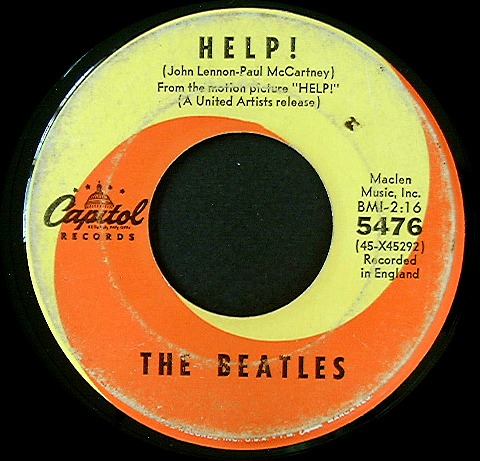
I've adored "The Beatles" my whole life.
And now I love Paul even more.

I don't think my husband will mind.

Source
The Telegraph
reade more... Résuméabuiyad

Celebrating Psychoanalysis


Many people are unfamiliar with psychoanalysis and get a glimpse of it in caricatured form through movies, television or books. In these mediums, psychoanalysis is often presented as a stilted experience, where a couch-lying patient drones on about emotions and feelings to a stoic therapist who is busily taking notes. The other polar extreme is that the analyst, fatigued from his or her patient's narrative, falls asleep [1].

The misconceptions go even further where mental health professionals who work within other psychological treatment modalities are often misinformed about the mechanics of psychoanalysis, dismissing it as if it were a singular homogenized school of thought. Many are not even aware that research and empirical studies have shown that psychoanalysis and psychodynamic therapy are successful treatments [2].

Psychoanalysis is grounded on the observation "that individuals are often unaware of many of the factors that determine the emotions and behavior. These unconscious factors may create unhappiness, sometimes in the form of recognizable symptoms and at other times as troubling personality traits, difficulties in work or in love relationships, or disturbances in mood and self-esteem. Because these forces are unconscious, the advice of friends and family, the reading of self-help books, or even the most determined efforts of will, often fail to provide relief. Psychoanalytic treatment demonstrates how these unconscious factors affect current relationships and patterns of behavior, traces them back to their historical origins, shows how they have changed and developed over time, and helps the individual to deal better with the realities of adult life. Analysis is an intimate partnership, in the course of which the patient becomes aware of the underlying sources of his or her difficulties not simply intellectually, but emotionally - by re-experiencing them with the analyst "[3] .

Psychoanalysis has evolved over the last 100 years from Freud's initial model, and it has grown to include many different and compelling schools of thought. It is a rich, deep and involved process. It offers a modern vitality and introspection that many may not realize. And most of all, it needs to be celebrated as a viable option for the treatment of psychological symptoms [4].


Footnotes
[1] Serani, D. (2002). Understanding psychoanalysis. The Participant-Observer, 4(1): 4-6.
[2] http://www.apsa.org/pubinfo/efficacystudies.htm
[3] http://apsa.org/pubinfo/about.htm
[4] http://www.apa.org/monitor/oct05/closer.html

Resources
American Academy of Psychoanalysis
American Psychoanalytic Association
American Psychological Association: Division 39 - Psychoanalysis
American Psychological Association: Division 39 - Section: Psychoanalytic Reserarch Society
American Society of Psychoanalytic Physicians
Argentine Psychoanalytic Association
Asociacición Psicoanálitica Mexicana
Association for Child Psychoanalysis
Association for the Study of Dreams
Australian Psychoanalytic Society
Brisbane Centre for Psychoanalytic Studies, Australia
British Psychoanalytical
Buenos Aires Psychoanalytic Association
Canadian Psychoanalytic Society
Centre for Psychoanalytic Studies
International Psychoanalytical Association
Italian Psychoanalytic Society
IPSO
Mexican Psychoanalytic Association
Psychoanalysisarena.com/
Psychoanalytic Federation of Latin America
Sociedade Psicanalítica de Porto Alegre
The Swedish PsychoAnalytical Society


*Thanks to my many blogfriends who have suggested a post be written about psychoanalysis *
reade more... Résuméabuiyad

Famous Psychology Quotes


People are like stained glass windows. They sparkle and shine when the sun's out, but when the darkness sets in, their true beauty is revealed only if there is light within.
~ Elisabeth Kubler-Ross (1926-2004) Swiss American Psychiatrist & author.


"Thought is action in rehearsal."
~ Sigmund Freud (1856-1939) Austrian founder of psychoanalysis


"Success is a state of mind. If you want success, start thinking of yourself as a success."
~ Dr. Joyce Brothers (1928-) American psychologist, TV-radio personality, columnist & author.


"Education is not just the filling of a pail, it is the lighting of a fire."
~ B. F. Skinner (1904-1990) American psychologist


"Your vision will become clear only when you look into your heart. Who looks outside, dreams. Who looks inside, awakens." ~Carl Jung, (1875-1961),Swiss psychiatrist, psychoanalyst


"Hate is a product of the unfulfilled life."
~ Erich Fromm (1900-1980) American psychologist, psychoanalyst.


"When I look at the world I'm pessimistic, but when I look at people I am optimistic."
~Carl Rogers (1902-1987), American psychologist.


"The only normal people are the one's you don't know very well."
~ Alfred Adler (1870-1937), Austrian psychologist.


"All the art of living lies in a fine mingling of letting go and holding on."
~Henry Ellis (1859-1939), British Psychologist


"Sex is not a sin. Many people have complained that this is taking all the fun out of sex."
~ Ruth Westheimer (1928 - ), German-American psychologist, TV radio personality & author.


"If you only have a hammer, you tend to see every problem as a nail."
~Abrahamm Maslow (1908-1970), American psychologist.


"All of us are much more human than otherwise. "
~Harry Stack Sullivan (1892-1941), American psychologist.


reade more... Résuméabuiyad