Pages

.

Trauma, Triggers and Flashbacks

A trigger is something that sets off a memory transporting a person back to the event of the original trauma. A flashback can take the form of pictures, sounds, smells, body sensations, feelings, or numbness.

And, for those who may be teetering on the edge of these traumatic responses, The University at Alberta has some suggestions:

1. Tell yourself that you are having a trigger response or a flashback.

2. Remind yourself that the worst is over. The feelings and sensations you are experiencing are memories of the past. The actual event has already occurred and you survived. Now it is the time to let out the terror, rage, hurt, and/or panic. Now is the time to honor your experience.

3. Get grounded. This means stamping your feet on the ground to remind yourself that you have feet and can get away now if you need to. (There may have been times before when you could not get away, now you can.) Being aware of all five senses can also help you ground yourself.

4. Breathe. When we get scared we stop normal breathing. As a result our body begins to panic from the lack of oxygen. Lack of oxygen in itself causes a great deal of panic feelings; pounding in the head, tightness, sweating, feeling faint, shakiness, and dizziness. When we breathe deeply enough, a lot of the panic feeling can decrease. Breathing deeply means putting your hand on your diaphragm, pushing against your hand, and then exhaling so the diaphragm goes in.

5. Reorient to the present. Begin to use your five senses in the present. Look around and see the colors in the room, the shapes of things, the people near, etc. Listen to the sounds in the room: your breathing, traffic, birds, people, cars, etc. Feel your body and what is touching it: your clothes, your own arms and hands, the chair, or the floor supporting you.

6. Get in touch with your need for boundaries. Sometimes when we are having a flashback we lose the sense of where we leave off and the world begins; as if we do not have skin. Wrap yourself in a blanket, hold a pillow or stuffed animal, go to bed, sit in a closet, any way that you can feel yourself truly protected from the outside.

7. Get support. Depending on your situation you may need to be alone or may want someone near you. In either case it is important that your close ones know about flashbacks so they can help with the process, whether that means letting you be by yourself or being there.

8. Take the time to recover. Sometimes flashbacks are very powerful. Give yourself time to make the transition form this powerful experience. Don't expect yourself to jump into adult activities right away. Take a nap, a warm bath, or some quiet time. Be kind and gentle with yourself. Do not beat yourself up for having a flashback.

9. Honor your experience. Appreciate yourself for having survived that horrible time. Respect your body's need to experience a full range of feelings.

10. Be patient. It takes time to heal the past. It takes time to learn appropriate ways of taking care of yourself, of being an adult who has feelings, and developing effective ways of coping in the here and now.


References
University of Alberta:Triggers and Flashbacks
reade more... Résuméabuiyad

Sign Language Benefits


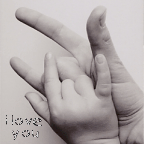
Sign Language is undergoing a rebirth as a way for new parents to understand the needs of their hearing babies long before they can talk.

Hearing babies exposed to Sign Language were able to communicate more complex messages through the use of signs than they could verbally.

Sign Language is used along with verbal language to help solidify communication. Just like with Deaf babies, these techniques have be shown to be instrumental in making communication between parent and child soar.

Signs like "stop", "gentle", and "share" help toddlers learn how to play together more cooperatively. And signs like "milk", "eat", and "hot" help babies communicate their needs before verbal language ever enters the picture.

While the Baby Sign Language trend is growing world-wide, some people wonder whether Sign Language delays speech.

Well, I can tell you that Sign Language facilitates the learning of verbal language. My doctoral dissertation, almost 20 years ago, was on Sign Language and the benefits of language acquisition for Hearing and Deaf children. And research since then has shown that teaching Sign Language to Hearing children offers many positive outcomes.

Signing has been shown not only to motivate babies to talk, but a National Institute of Health Study also showed Hearing 8-year-olds who had been signing at an early age had higher IQs, greater self-esteem, higher frustration tolerance, enriched parent-child bonding, and more sophisticated play experiences. Signing babies also displayed an increased interest in books.

Even Baby Einstein, the influential maker of educational toys for babies, has introduced a "Baby Wordsworth" DVD, featuring Deaf actress Marlee Matlin, designed to teach 25 signs to babies, toddlers and preschoolers. Sesame Street, Blues Clues and a host of other child-oriented television shows incorporate Sign Language as well.

I think it'd be great if the teaching of Sign Language could continue beyond the childhood years so that Deaf and Hearing worlds could connect more easily.


References
Acredolo, L. P., & Goodwyn, S.W. ( 2000). The long-term impact of symbolic gesturing during infancy on IQ at age 8. Paper presented at the meetings of the International Society for Infant Studies, Brighton, UK. Study funded by the National Institutes of Health.

Baby Einstein

BBC News
reade more... Résuméabuiyad

Surviving Stalking


Stalking is defined as "the willful, malicious and repeated following and harassing of another person"

- J. R. Meloy


Stalking can affect anyone no matter gender, race, socio-economic status or geographic location.

According to data in the United States, 1 in 12 women and 1 in 45 men will be stalked in their lifetime.

A stalker can be anyone. There is no single psychological profile that indicates a person may have a tendency to be a stalker. This is one of the reasons why every stalking case must be handled on an individual basis.

Another reason is that in many cases the stalker is someone the victim knows, ex-spouse, ex-boy/girlfriend, coworker, casual acquaintances, but a stalker can also be a stranger.


Things To Do

* No one ever deserves to be a victim of a stalker. Every situation that involves stalking is different, but there are a few guidelines to follow if you feel you are a victim of a stalker.

* Convey to the stalker that you wish to have no contact with him/her.

* Inform friends, family and your employer of the situation.

* Inform your local police department that you are a victim of a stalker; this is necessary even if you do not intend to file charges.

* Document the situation in which you have seen or had any type of contact with the stalker. This can be done in a personal diary or journal. Save all letters or emails.

* Change your email address, website or blog, if necessary.

* Also document any other pertinent information such as license plate number, personal appearance. These steps can help you if the situation escalates into something more dangerous.


Additional Steps

* File for a restraining or protective order. Information on filing can be obtained from your local court.

* Create a contingency plan. You may not think that you are in imminent danger, but the possibility still exists. Your local police or domestic violence center may be able to assist you with a more specific plan, but some ideas are:

* Have a list of critical telephone numbers; e.g. local police, friends, domestic violence centers, an attorney.

* Have a necessities bag. Possibly a small suitcase you can keep in the trunk of your car, just in case you can’t go home. It also may be a good idea to keep some cash in your necessities bag just in case.

* Always make sure you are never low on gas in your car.

* Take preventative measures to protect yourself from the stalker. Vary your routine. Do not do the same activities at the same time every day. For example go to work a little earlier than usual and use a different route.

* Have co-workers, roommates or family members screen phone calls and visitors.

* Do not travel alone if at all possible - "There is safety in numbers".


Other Research

Although significant attention has been devoted to adult perpetrators and victims of stalking, there is persuasive evidence that stalking begins at a much younger age.

Research suggests that stalking begins early and has developmental issues related to attachment, identity formation, and emotional states involving jealousy, envy, and anger.


References

McCann, J.T. (2000). Stalking in children and adolescents: The primitive bond. Washington: APA Books.

Meloy, J. R. (1998). The psychology of stalking: Clinical and forensic perspectives. New York: Academic Press.

Pathe, M. (2002). Surviving stalking. Cambridge: Cambridge University Press.

Stalking Resources

Stalking Resource Center

Surviving Stalking
reade more... Résuméabuiyad

Angry Faces


What an angry face this little baby has, wouldn't you agree?

An article from the June 2006 journal of Current Biology supports research on how angry facial expressions are a priority when visually processing aspects in our world.

We are instinctually wired to be attuned to threatening faces in our environment. In fact, there are specific brain regions that are dedicated to processing threatening facial expressions.

In evolutionary terms, knowing what was dangerous helped our ancestors to survive. Psychologically speaking, sensing the threat set into motion a variety of defenses that enabled our ancestors to move through the emotional experience of danger.

We still rely on this wiring today. When we see the angry boss coming or view a threatening situation, our defensive strategies are activated. If danger can be seen, we can respond.

But, sadly, there are many times that we don't see the danger coming. Our visual scanning doesn't pick up the angry face because it is masked. We don't see the dangerous person that lingers underneath the non-threatening face. We are simply not wired for that.

The best we can do when we are confronted with a wolf in sheep's clothing is to get out of harm's way as fast as possible - with no self-blame or self-reproach.

Now, back to this angry face...I wonder what made this little baby so mad?


Reference
Williams, M. & Mattingley, J.B. (2006) Do angry men get noticed? Current Biology, 16, R402-R404.
reade more... Résuméabuiyad

The Black-and-White Of Low Self-Esteem

People who see their relationships as either all good or all bad tend to have low self-esteem, according to a series of seven studies by Yale researchers published in the Journal of Personality and Social Psychology .

The findings suggest that those who had low self esteem found it hard to think of their partners as a mix of positive and negative characteristics at a given point in time. Those with higher self-esteem were able to hold onto both the good and bad aspects of their partner and see them in the gray, instead of in black-and-white.

Researcher Dr. Margaret Clark says, " In good times, those low in self-esteem tend to idealize partners, rendering those partners safe for approach and likely to reflect positively upon them. At the first sign of a partner not being perfect, however, they switch to focusing on all possible negatives about the partner so as to justify withdrawing from that partner and not risking vulnerability."

Low self-esteem can have other devastating consequences.

* It can create anxiety, stress, loneliness and increased likelihood for depression.

* It can cause problems with friendships and relationships.

* It can seriously impair academic and job performance.

* It can lead to underachievement and increased vulnerability to many self destructive behaviors.

* Worst of all, these negative consequences themselves reinforce the negative self-image and can take a person into a downward spiral of lower and lower self-esteem.


The Good News

The good news is that though self-esteem is largely developed during childhood, it can be increased and strengthened. According to the University of Texas at Austin Counseling Center, three steps can help you get there.

Step 1: Rebut the Inner Critic: Challenge the negative messages of your critical inner voice. This means that you have to counter your negative self-thinking with positive mantras.

Step 2: Practice Self-Nurturing: Healthy self-esteem begins when you treat yourself as a worthwhile person. Start to challenge past negative experiences or messages by nurturing and caring for yourself in ways that show that you are valuable, competent, deserving and lovable.

Step 3: Get Help from Others: This can be the hardest step. People with low self-esteem often don't ask for help because they feel they don't deserve it. But since low self-esteem is often caused by how other people treated you in the past, you may need the help of other people in the present to challenge the critical messages that come from negative past experiences. Find good role models, healthy loving people with whom you can share your time, thoughts and experiences.

Viewing yourself, your partner or the world in black-and-white short-changes everything. Life should be filled with a palette of colors.


References

Clark, M. & Graham, S. (2006) Self-esteem and organization of valenced information about others: The jekyll and hyde-ing of relationship partners. Journal of Personality and Social Psychology. 90(4): 652-665.

reade more... Résuméabuiyad

Money Can't Buy Happiness - Or So Research Says


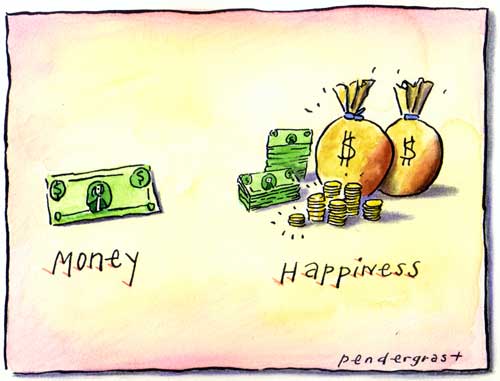
Dr. Arthur Stone, Psychologist and Researcher at The State University at Stony Brook, has discovered what philosophers have long known: Money doesn't make people happier.

In a study that appears in this month's Science , Dr. Stone along with researchers at Princeton University, the University of Michigan and the University of California in San Diego, explored the relationship between money and happiness.

"It's mostly illusory," Stone said. "When you look at people's actual experience, the rich are not happier than others. And if they are, it has little to do with the money they have."

I don't know if I completely agree.
I think that money can help lighten aspects of strain and anguish, poverty and despair. In turn, wouldn't that bring a sense of relief and joy? Maybe I am being too semantic about this.

What do you think?


References
Newsday
Stone, A. (2006) Would You Be Happier If You Were Richer
reade more... Résuméabuiyad

Depression and Your Heart


"A broken heart"
"Oh, this is such heartache"
"Follow your heart"
"That's a heartfelt thought"

Maybe you've used them to describe how you feel - - or perhaps you've heard such phrases from other people. Either way, the heart is more than an life sustaining organ. It is a symbol of feelings and thoughts too.

And a new study published in the Journal of the American Medical Association (JAMA) shows that depression is more common among patients with heart ailments.

In fact, over at A Hearty Life you can read statistics like this:

1 in 20 people in the general population has depression.

1 in 5 patients with coronary heart disease has depression.

1 in 3 patients with congestive heart failure has depression.

And as many as half of all people hospitalized for surgery or other procedures to treat blocked heart arteries develop depression.


Unfortunately, despite its prevalence, depression continues to be underdiagnosed and undertreated by primary care physicians, cardiologists, and other specialists. But knowledge is power, so pass this on to someone you know, and let's kick depression outta here.


Hat Tip: Dr. Hsien-Hsien Lei at A Hearty Life
reade more... Résuméabuiyad