Pages

.

Eating Disorder Awareness Week


According to the National Eating Disorder Association, eating disorders are illnesses with a biological basis modified and influenced by emotional and cultural factors. The stigma associated with eating disorders has long kept individuals suffering in silence, inhibited funding for crucial research and created barriers to treatment. Because of insufficient information, the public and professionals fail to recognize the dangerous consequences of eating disorders. While eating disorders are serious, potentially life threatening illnesses, there is help available and recovery is possible.

Eating disorders are not just exclusively experienced by girls and women. Research has shown us that boys and men experience the disorder as well. Look here for more information about the subtypes of eating disorders, cultural and sex differences, resources, statistics and ways to love yourself and your body.

February has been a National Awareness Month for Eating Disorders world-wide. More information reduces stigma. And when stigma is reduced, hope is possible.

Here's to hope and loving yourself no matter what!


Resources

The Eating Disorders Association(EDA) in the United Kingdom strives to improve the quality of life for people affected by eating disorders. @http://www.edauk.com/

The National Eating Disorder Information Centre (NEDIC) is a Toronto-based, non-profit organization, established to provide information and resources on eating disorders and weight preoccupation. @ www.nedic.ca

The National Eating Disorders Association (NEDA) is the largest not-for-profit organization in the United States working to prevent eating disorders and provide treatment referrals to those suffering from anorexia, bulimia and binge eating disorder and those concerned with body image and weight issues @ http://www.nationaleatingdisorders.org/
reade more... Résuméabuiyad

Celebrating Psychoanalysis


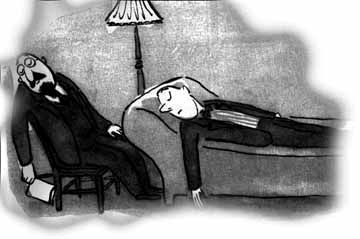
Many people are unfamiliar with psychoanalysis and get a glimpse of it in caricatured form through movies, television or books. In these mediums, psychoanalysis is often presented as a stilted experience, where a couch-lying patient drones on about emotions and feelings to a stoic therapist who is busily taking notes. The other polar extreme is that the analyst, fatigued from his or her patient's narrative, falls asleep [1].

The misconceptions go even further where mental health professionals who work within other psychological treatment modalities are often misinformed about the mechanics of psychoanalysis, dismissing it as if it were a singular homogenized school of thought. Many are not even aware that research and empirical studies have shown that psychoanalysis and psychodynamic therapy are successful treatments [2].

Psychoanalysis is grounded on the observation "that individuals are often unaware of many of the factors that determine the emotions and behavior. These unconscious factors may create unhappiness, sometimes in the form of recognizable symptoms and at other times as troubling personality traits, difficulties in work or in love relationships, or disturbances in mood and self-esteem. Because these forces are unconscious, the advice of friends and family, the reading of self-help books, or even the most determined efforts of will, often fail to provide relief. Psychoanalytic treatment demonstrates how these unconscious factors affect current relationships and patterns of behavior, traces them back to their historical origins, shows how they have changed and developed over time, and helps the individual to deal better with the realities of adult life. Analysis is an intimate partnership, in the course of which the patient becomes aware of the underlying sources of his or her difficulties not simply intellectually, but emotionally - by re-experiencing them with the analyst "[3] .

Psychoanalysis has evolved over the last 100 years from Freud's initial model, and it has grown to include many different and compelling schools of thought. It is a rich, deep and involved process. It offers a modern vitality and introspection that many may not realize. And most of all, it needs to be celebrated as a viable option for the treatment of psychological symptoms [4].


Footnotes
[1] Serani, D. (2002). Understanding psychoanalysis. The Participant-Observer, 4(1): 4-6.
[2] http://www.apsa.org/pubinfo/efficacystudies.htm
[3] http://apsa.org/pubinfo/about.htm
[4] http://www.apa.org/monitor/oct05/closer.html

Resources
American Academy of Psychoanalysis
American Psychoanalytic Association
American Psychological Association: Division 39 - Psychoanalysis
American Psychological Association: Division 39 - Section: Psychoanalytic Reserarch Society
American Society of Psychoanalytic Physicians
Argentine Psychoanalytic Association
Asociacición Psicoanálitica Mexicana
Association for Child Psychoanalysis
Association for the Study of Dreams
Australian Psychoanalytic Society
Brisbane Centre for Psychoanalytic Studies, Australia
British Psychoanalytical
Buenos Aires Psychoanalytic Association
Canadian Psychoanalytic Society
Centre for Psychoanalytic Studies
International Psychoanalytical Association
Italian Psychoanalytic Society
IPSO
Mexican Psychoanalytic Association
Psychoanalysisarena.com/
Psychoanalytic Federation of Latin America
Sociedade Psicanalítica de Porto Alegre
The Swedish PsychoAnalytical Society


*Thanks to my many blogfriends who have suggested a post be written about psychoanalysis *
reade more... Résuméabuiyad

D'oh: Keeping Your Mental Alertness


Scientists have known for years that as we get older, the brain tends to function less efficiently, and electrical currents connecting different areas of the brain get weaker. Now studies have shown that this gradual deterioration can be reversed.

Mental decline as you age appears to be largely due to altered connections among brain cells. But research has found that keeping the brain active seems to increase its vitality and may build its reserves of brain cells and connections. Even new brain cells can be generated.

Yes, Homer Simpson, even you can generate new brain cells too.

Low levels of education have been found to be related to a higher risk of Alzheimer’s later in life. This may be due to a lower level of life-long mental stimulation. Put another way, higher levels of education appear to be somewhat protective against Alzheimer’s, possibly because brain cells and their connections are stronger. Well-educated individuals can still get Alzheimer’s, but symptoms may appear later because of this protective effect.

You don’t have to turn your life upside down to keep a healthy mental alertness.

Keep your brain active every day:

1. Stay curious and involved — commit to lifelong learning.
2. Read, write, work crossword or other puzzles.
3. Attend lectures and plays.
4. Enroll in courses at adult education centers, community college or other community group
5. Play games.
6. Garden.
7. Try memory exercises.
8. Do aerobic exercise - walking is wonderful.
9. Teach someone something.
10. Listen to classical music.


Resources

Alzheimer's Organization http://www.alz.org/maintainyourbrain/mactive.asp

AARP Online Games and Puzzleshttp://www.aarp.org/games/

Third Age Online Gameshttp://www.thirdage.com/living/games/sbt1/

The Memory Page – Tips and exercises to help you improve your memory at any age.

The New York Times Crossword Puzzlehttp://www.nytimes.com/pages/crosswords/

reade more... Résuméabuiyad

Resistant Depression Looks to the Vagus Nerve Stimulator


Many people who experience depression have found tremendous relief of symptoms from talk therapy and antidepressant medications. But, there are many people whose depression does not improve with these treatments. These individuals have what is known in the clinical field as "treatment resistant depression". Up until now, those individuals with chronic depression were offered intensive treatments like Electro-Convulsive Therapy as a last resort.

Technology continues to be one the great cornerstones in treating psychological and psychiatric disorders. On July 15, 2005, the FDA approved Vagus Nerve Stimulation as a treatment for chronic depression.

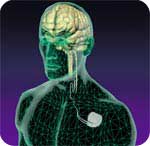
The Vagus Nerve Stimulator (VNS) is not related to brain surgery, although it is a treatment that affects the function of the brain. VNS uses specific stimulation of the vagus nerve to send stimulation to specific parts of the brain that are involved in mood. It is not like Electro-Convulsive Therapy (ECT), a treatment that involves stimulation of the entire brain, results in short term memory loss and sometimes pain. Patients who have used VNS do not feel the stimulation from the stimulator since the vagus nerve does not have the type of nerves that carry pain signals. Nor does VNS interfere with memory loss. Patients having Vagus Nerve Stimulation can continue taking their other medications without worrying about side effects or interactions as well.

The Vagus Nerve Stimulator is a small device implanted under the skin near the collarbone. A wire under the skin connects the device to the vagus nerve in the neck. A physician programs the device to produce weak electrical signals that travel along the vagus nerve to the brain at regular intervals. These intervals ease the symptoms of depression. Five months after it was approved for sale, The VNS treatment for chronic, unresponsive or "resistant depression" is winning favor in the medical and psychological community.

Houston-based Cyberonics says a growing number of psychiatrists and surgeons are being trained to use its Vagus Nerve Stimulator, and an increasing number of insurance companies are agreeing to reimburse patients for their costs. In order to be a candidate for this new treatment, you must be a severely depressed adult who had not responded to at least four different treatment regimens.

As of December 2005, 62 insurance providers had agreed to pay for costs associated with VNS therapy. And many other insurance companies have agreed to reimburse patients who use the device on a case-by-case basis.

For those who have endured depression for many years without relief from traditional interventions, this new technology can offer life changing results. And it furthers our understanding that depression is a real, biological issue!


References

Anderson, B. et al. (2005). Vagus nerve stimulation affects pain perception in depressed adults. Pain Research & Management. 10(1), 9-14.

George, M.S. et al. (2005). A One-Year Comparison of Vagus Nerve Stimulation with Treatment as Usual for Treatment-Resistant Depression. Biological Psychiatry. 58(5), 364-373.

Vagus Nerve Stimulation Therapy @ http://www.vnstherapy.com/
reade more... Résuméabuiyad

Finding Love: Traits in a Mate

"When it comes to romance, women prefer someone who tickles their funny bone while men opt for those who catch their eye, according to an international survey released on Wednesday [1/25/06].

The survey, conducted in 16 countries by Canadian romance publisher Harlequin Enterprises, asked men and women on six continents about traits they liked or disliked and how they went about trying to meet Mr. or Ms. Right.

The poll revealed differences between countries in the way people tried to impress the opposite sex.

Australians and British men frequently admitted drinking too much, while about half of German and Italian men said they had lied about their finances. Spaniards were the most likely to use sex to catch someone's attention.

Eighty percent of Brazilian and Mexican men said they had lied about their marital or relationship status, as did 70 percent of German women, the survey said.

When it came to meeting that special someone, a majority of respondents preferred to rely on friends for introductions. The Internet was not a popular hunting ground except in Portugal, where about half the surveyed men and women opted to find people online.

Both Spain and France suffered a gender gap. Thirty percent of Spanish men, but no Spanish women, looked for love online. In France, 40 percent of men but only 10 percent of women attended parties, bars and clubs to meet someone, but they did have one thing in common: both sexes rated looks as more important than their counterparts in other countries.

When it came to that first meeting, a majority of men polled said beauty was more important than brains, while women put a sense of humor at the top of their list.

Physical attraction was the top priority for men in France, Brazil, Greece, Japan and Britain. And while 40 percent of Portuguese men rated intelligence over looks in a first encounter, no Australian men did so.

In the United States and Canada, humor was considered the most important trait by both men and women, getting 63 and 73 percent of the vote respectively."

All I can say from my own experience is that my hubby won me with his humor and he felt the same about my wit. Two funny people still laughing and loving after 20 years.

What traits do you look for?


Reference
http://news.yahoo.com/ Tandon, K. (2006) "And The Most Important Thing In A Mate Is..."
reade more... Résuméabuiyad

What Parents Need to Know About Child Sexual Abuse

Renee's blog, Playground in My Mind (http://writeawayzine.blogspot.com/), had this entry back in 2005. I have posted it here because it I think it is contains information to help keep children safe and protected. I thank Renee for the find.

Child Sexual Abuse: The Hidden Epidemic
By Sherryll Kraizer, Ph.D., Coalition for Children

While abduction by a stranger is one of the most terrifying things for a parent to think about, children are actually far more vulnerable to abuse by people known to the family and community. Child abuse occurs when an adult causes, or threatens to cause, emotional, physical or sexual harm to a child. Child abuse includes physical, sexual, and emotional abuse.

Parents should know that:
1. 85 to 90% of all abuse occurs at the hands of someone known to the child, someone in a position of trust.

2. About one in every four children will be sexually abused by the age of eighteen.

3. Most sexual abuse involves no outwardly visible physical damage to the child.

4. The damage comes from the physical and emotional violation of the child, and the violation of a trusted relationship. These can be more long-lasting than physical injury.

5. Most abusers are family, friends, and neighbors, someone the child knows and trusts.

6. Parents, schools and organizations may use all of the avoidance technology at their disposal against strangers, yet experience tells us that they are almost always surprised to discover perpetrators in their midst.

7. Parents obviously don't leave their children in the care of people they believe to be perpetrators, but the facts tell us that parents must be prepared for such an event.

A Child's Best Defense
The best way to prevent abuse when the parent or care-taking adult is not present is to provide children with the skills they need to help protect themselves. The essential prevention of child abuse skills can be taught without talking about abuse. Children don't need to be told what abuse is, who the offenders are, how they operate, what they do, or why.

They don't need to be told that the people they love might hurt them. Rather, prevention is learned through positive and concrete messages that give children the skills they need to act effectively on their own behalf when they are in potentially abusive situations. The reality is that there are times when children can and must be responsible for their own well-being, such as when they are alone with a potential abuser.

At such times, they need permission to speak up. They need specific skills and techniques to stop what's being done to them. And, they must know they will be believed and supported by the adults in their lives.

The Best Overall Defense Children Have Against Abuse Is:
* A sense of their own natural abilities (instincts).

* The ability to accurately assess and handle a variety of situations.

* Knowing where and how to get help.

* Knowing they will be believed.


A Child Needs To Know:
*Your body belongs to you.

*You have a right to say who touches you and how.

*If someone touches you in a way you don't like, in a way that makes you feel funny or uncomfortable inside, or in a way that you think is wrong or your parents would think is wrong, it's okay to say "no."

*If the person doesn't stop, say, "I'm going to tell" and then tell, no matter what.

*If you're asked to keep a secret, say, "No, I'm going to tell."

*If you have a problem, keep talking about it until someone helps you.

Children learn that they can have more control over what happens to their bodies when we teach them, and when we show them through our own behavior, that their bodies do, indeed, belong to them. Children as young as two and three already know what touch they like and what touch they don't like. Touching they don't like makes them feel uneasy and may seem wrong to them.

The Safe Child Program gives children permission to speak up. It teaches them how to speak up effectively and in a way that is appropriate. Prevention of child abuse techniques must be learned not just as ideas, but as real skills. Proven classroom programs for children and follow-through by parents are the best way to learn these skills. This means practice.

Part of effective prevention education includes role-play, giving children an opportunity to see how it feels to say "no" in a difficult situation. Just as children don't learn to ride a bicycle by talking or reading about bicycling, children don't learn to prevent child abuse without opportunities to work with the techniques, to practice and feel comfortable with the skills. Role-play, practicing and parental reinforcement are the keys to teaching children to protect themselves when adults are not there to protect them.

How to Respond if a Child Tells You About Abuse
The trauma of a child reporting abuse is very real. If this happens, the first concern is to remain calm and supportive of the child. Give the child an opportunity to tell you in his or her own way what happened. Don't over-react or criticize the child in any way.

The Child Needs To Be Told:
*That you believe him/her and you're glad s/he told you.

*That s/he didn't do anything wrong.

*That you will do your best to see that s/he is not hurt again and you will make every effort to get help.

*Do not promise the child that you will do anything specific. You may not be able to keep that promise.

*Children who report sexual or physical abuse need to be examined by a doctor. Make the child a part of the process. If possible find a physician the child knows or one who is particularly experienced in abuse cases.

REMEMBER: Almost without exception children do not lie about abuse, except to deny that it happened.

REMEMBER ALSO: The trauma of abuse is long-term and not always apparent. When a child reports being abused, the process of recovery begins.

Reporting Suspected Child Abuse or Neglect
The decision to report suspected abuse is almost always difficult. Remember that 85-90% of all sexual abuse and virtually all physical and emotional abuse involve someone known to the child. This means that the offender is usually known to the community.

Interpersonal relationships and community considerations frequently bring hesitation to report. At these times, it is important to remember that the TOTAL responsibility for the offense lies with the offender.

Reporting PROTECTS the child and may protect other children from becoming or continuing to be victims of abuse. A person who reports suspected abuse is not responsible for ruining the offender's life. The person who has the courage and takes the responsibility to report is saving a child as well as future victims.

ANYONE may report a suspected case of child abuse or child maltreatment. It is important to know that the law does not require certainty before reporting and that you have no responsibility to investigate or to try to gather more information yourself. Any suspected case should be reported.

Reporting suspected abuse or maltreatment does not make a person legally liable, however there may be penalties for failure to report. The law protects any person, official, or institution that makes a report in good faith (meaning an honest belief that a child is being abused) by providing immunity from any liability, civil or criminal, that might otherwise result from such actions.

While reporting child abuse can be difficult, all of us have an obligation to act on behalf of all children. If we do not act, who will?

Resources
The National toll-free number to report suspected abuse is 1-800-4ACHILD at http://www.childhelpusa.org/ THE COALITION FOR CHILDREN is a not-for-profit organization, founded in 1983, which is committed to creating and providing positive and effective prevention programs for children and families.

The Coalition is not a group; rather it acts as a catalyst, bringing together individuals and organizations for specific projects and community action. To learn more, please visit: http://www.safechild.org/.

reade more... Résuméabuiyad

Yet another difference between the sexes: Schadenfreude


Do you feel others' pain, empathize with what they are going through? Or do you, instead, feel good or experience a secret delight when someone gets hurt?

A recent study says it depends on whether you're a man or a woman. The phenomenon of witnessing someone's misfortune is called Schadenfreude. And according to research done at University College in London, men* seem to enjoy watching others and their misfortunes more than women.

Using brain-imaging techniques, researchers compared how men and women reacted when watching other people suffer pain. If the sufferer was someone they liked, areas of the brain linked to empathy and pain were activated in both sexes. If it was someone they disliked only women showed empathy while men showed a surge in Schadenfreude.

The research which has just been published in the science journal Nature , illustrates that empathic responses to others are not automatic, but depend on an emotional link to the person who is observed suffering.

Now, I often enjoy when the bad guy or gal in a movie, book or television show gets their comeuppance, but I certainly don't include myself in enjoying watching a real person fall down a flight of stairs, step in unseen doggie-poo or get reamed out by the boss. I actually feel bad for them. I like to think I'm low on the Schadenfreude scale. But this is an interesting study and can help to explain things from the mild, like a joke , to the extreme, like terrorism.


* I like to think that the men I know don't Schadenfreude often!

Reference
Nature advance online publication; published online 18 January 2006 doi:10.1038/nature04271
reade more... Résuméabuiyad