Pages

.

Massage Therapy & It's Health Benefits


Massage is one of the oldest healing arts.

Chinese records dating back 3,000 years document its use - the ancient Hindus, Persians and Egyptians applied forms of massage for many ailments - and Hippocrates wrote papers recommending the use of rubbing and friction for joint and circulatory problems.

Today, the benefits of massage are varied and far-reaching. Massage Therapy does not only ease the stress and tension of everyday life. It has been shown to be beneficial for many chronic conditions, including low back pain, arthritis, bursitis, fatigue, high blood pressure, pregnancy, diabetes, immunity suppression, infertility, and more.

Massage Therapy is also excellent for individuals with anxiety or depression, and for anyone recovering from trauma. I often recommend Massage Therapy when I work with patients.


What is Massage Therapy?

Massage Therapy, involves applications of various techniques to the muscular structure and soft tissues of the human body. Through this healing touch, muscles are relaxed, toxins are released and endorphins flow. There are more than 200 variations of massage, bodywork, and somatic therapies and many practitioners utilize many different kinds of techniques. Click here for more information on what to expect from Massage Therapy.

Massage Therapy can be obtained through spa services, medical offices, and privately through a licensed masseuse. And, uh, please make sure your Massage Therapist is a licensed one, so no hanky-panky goes on!

And if you can't get to a professional Massage Therapist, ask someone you love to get their hands on you!

Touch is so healing.


References
American Massage Therapy Association
MassageTherapy.com
reade more... Résuméabuiyad

Grading The States 2006: A Report On America's Healthcare System For Mental Illness


The National Alliance on Mental Illness in the United States, presents this first comprehensive state-by-state analysis of mental health care systems in 15 years. Every U.S. state has been scored on 39 specific criteria resulting in an overall grade and four sub-category grades for each state. The national average grade is D. Five states receive grades in the B range. Eight receive F's. None received A's.

My state - New York- got a grade of "U"- that's right a "U", signifiying an "unresponsive" status in regard to the questions posed.

Select a state and view its report card and NAMI's analysis here --> Click-Your-State.

Then, be sure to visit the Take Action area to find out how you can get involved and make a difference.

To my readers out of the country, I hope your healthcare is better than ours!


Resource:
National Alliance of Mental Illness (NAMI)
reade more... Résuméabuiyad

Genetics Explains Anorexia Nervosa

Once again technology, medicine and genetic research help to explain psychological and psychiatric disorders. What we can learn from these advances are that psychological disorders are real, often have a medical basis and should not be viewed as a shameful, character flaw in a child, adolescent or adult.

A new study from the March 2006 Archives of General Psychiatry exploring anorexia in twins concluded that more than half a person's risk for developing the eating disorder is determined by genes. Though most experts already believe there is a strong genetic component, this study "hammers home the fact that these are biologically based disorders," said Cynthia Bulik, lead author of the study who is a psychiatrist at the School of Public Health at the University of North Carolina-Chapel Hill.

Dr. Walter Kaye, a psychiatry professor at the University of Pittsburgh Medical Center says that "The next step, of course, will be to determine what the biology is, what genes are involved and what difference they make as far as how the brain works."

Woohoo, I think genetic research is so cool.


Reference
Bulik, C.; Sullivan; P.F.; Tozzi; F.; Furberg. H. ; Lichtenstein, P.; Pedersen, N.L. (2006). Prevalence, heritability, and prospective risk factors for anorexia . Archives of General Psychiatry, 63:305-312.


reade more... Résuméabuiyad

Art Therapy


The premise behind Art Therapy—using art for a psychotherapeutic purpose —is that creating allows children and adults to express what is uppermost in their minds more authentically than talking with a therapist.

Art Therapy helps the psychotherapist understand a person's perceptions and feelings about what has happened in the past - or what is happening in the present. Looking at the artwork and talking about what was created also helps the individual find a way to communicate what may be hard to say in words. Art Therapy can help a diverse range of children and adults, and is a meaningful expressive experience for those who involve themselves with it.


Sometimes art expresses emotions, thoughts or conflicts quite graphically, as in the sculpture pictured below:


Sometimes art conceals, disguises or expresses symbolically. What do you see in this child's painting?


The purpose of Art Therapy is to help express concepts that a person may not be able to articulate. The drawing, painting, collage, or sculpture can then help bridge artistic expression into verbal expression. And from there, healing begins.

Some of the benefits include of Art Therapy*:

Self-discovery: At its most successful, Art Therapy triggers insight and emotional catharsis.

Personal fulfillment: The creation of a tangible reward can build confidence and nurture feelings of self-worth. Personal fulfillment comes from both the creative and the analytical components of the artistic process.

Empowerment: Art Therapy can help people visually express emotions and fears that they cannot express through conventional means, and can give them some sense of control over these feelings.

Relaxation and stress relief: Chronic stress can be harmful to both mind and body. Stress can weaken and damage the immune system, can cause insomnia and depression, and can trigger circulatory problems like high blood pressure and irregular heartbeats. When used alone or in combination with other relaxation techniques such as guided imagery, Art Therapy can effectively relieve stress.

Symptom relief and physical rehabilitation: Art Therapy has a long history with the medical field as well. This type of therapy can promote physiological healing for children and adults who experience chronic pain, are recovering from a stroke, have had a heart attack or other catastrophic surgery, have cancer, AIDS, or a terminal illness, etc.

Hey, make your own online art at and express yourself at

Artpad Painter

or

Sketchplanet

Links:

*Find Articles. "Art Therapy" accessed @ http://www.findarticles.com World Wide Art Therapy Associations


reade more... Résuméabuiyad

Eating Disorder Awareness Week


According to the National Eating Disorder Association, eating disorders are illnesses with a biological basis modified and influenced by emotional and cultural factors. The stigma associated with eating disorders has long kept individuals suffering in silence, inhibited funding for crucial research and created barriers to treatment. Because of insufficient information, the public and professionals fail to recognize the dangerous consequences of eating disorders. While eating disorders are serious, potentially life threatening illnesses, there is help available and recovery is possible.

Eating disorders are not just exclusively experienced by girls and women. Research has shown us that boys and men experience the disorder as well. Look here for more information about the subtypes of eating disorders, cultural and sex differences, resources, statistics and ways to love yourself and your body.

February has been a National Awareness Month for Eating Disorders world-wide. More information reduces stigma. And when stigma is reduced, hope is possible.

Here's to hope and loving yourself no matter what!


Resources

The Eating Disorders Association(EDA) in the United Kingdom strives to improve the quality of life for people affected by eating disorders. @http://www.edauk.com/

The National Eating Disorder Information Centre (NEDIC) is a Toronto-based, non-profit organization, established to provide information and resources on eating disorders and weight preoccupation. @ www.nedic.ca

The National Eating Disorders Association (NEDA) is the largest not-for-profit organization in the United States working to prevent eating disorders and provide treatment referrals to those suffering from anorexia, bulimia and binge eating disorder and those concerned with body image and weight issues @ http://www.nationaleatingdisorders.org/
reade more... Résuméabuiyad

Celebrating Psychoanalysis


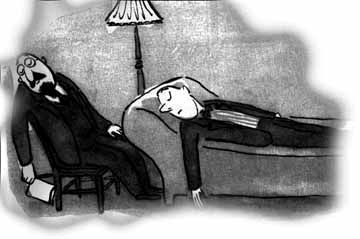
Many people are unfamiliar with psychoanalysis and get a glimpse of it in caricatured form through movies, television or books. In these mediums, psychoanalysis is often presented as a stilted experience, where a couch-lying patient drones on about emotions and feelings to a stoic therapist who is busily taking notes. The other polar extreme is that the analyst, fatigued from his or her patient's narrative, falls asleep [1].

The misconceptions go even further where mental health professionals who work within other psychological treatment modalities are often misinformed about the mechanics of psychoanalysis, dismissing it as if it were a singular homogenized school of thought. Many are not even aware that research and empirical studies have shown that psychoanalysis and psychodynamic therapy are successful treatments [2].

Psychoanalysis is grounded on the observation "that individuals are often unaware of many of the factors that determine the emotions and behavior. These unconscious factors may create unhappiness, sometimes in the form of recognizable symptoms and at other times as troubling personality traits, difficulties in work or in love relationships, or disturbances in mood and self-esteem. Because these forces are unconscious, the advice of friends and family, the reading of self-help books, or even the most determined efforts of will, often fail to provide relief. Psychoanalytic treatment demonstrates how these unconscious factors affect current relationships and patterns of behavior, traces them back to their historical origins, shows how they have changed and developed over time, and helps the individual to deal better with the realities of adult life. Analysis is an intimate partnership, in the course of which the patient becomes aware of the underlying sources of his or her difficulties not simply intellectually, but emotionally - by re-experiencing them with the analyst "[3] .

Psychoanalysis has evolved over the last 100 years from Freud's initial model, and it has grown to include many different and compelling schools of thought. It is a rich, deep and involved process. It offers a modern vitality and introspection that many may not realize. And most of all, it needs to be celebrated as a viable option for the treatment of psychological symptoms [4].


Footnotes
[1] Serani, D. (2002). Understanding psychoanalysis. The Participant-Observer, 4(1): 4-6.
[2] http://www.apsa.org/pubinfo/efficacystudies.htm
[3] http://apsa.org/pubinfo/about.htm
[4] http://www.apa.org/monitor/oct05/closer.html

Resources
American Academy of Psychoanalysis
American Psychoanalytic Association
American Psychological Association: Division 39 - Psychoanalysis
American Psychological Association: Division 39 - Section: Psychoanalytic Reserarch Society
American Society of Psychoanalytic Physicians
Argentine Psychoanalytic Association
Asociacición Psicoanálitica Mexicana
Association for Child Psychoanalysis
Association for the Study of Dreams
Australian Psychoanalytic Society
Brisbane Centre for Psychoanalytic Studies, Australia
British Psychoanalytical
Buenos Aires Psychoanalytic Association
Canadian Psychoanalytic Society
Centre for Psychoanalytic Studies
International Psychoanalytical Association
Italian Psychoanalytic Society
IPSO
Mexican Psychoanalytic Association
Psychoanalysisarena.com/
Psychoanalytic Federation of Latin America
Sociedade Psicanalítica de Porto Alegre
The Swedish PsychoAnalytical Society


*Thanks to my many blogfriends who have suggested a post be written about psychoanalysis *
reade more... Résuméabuiyad

D'oh: Keeping Your Mental Alertness


Scientists have known for years that as we get older, the brain tends to function less efficiently, and electrical currents connecting different areas of the brain get weaker. Now studies have shown that this gradual deterioration can be reversed.

Mental decline as you age appears to be largely due to altered connections among brain cells. But research has found that keeping the brain active seems to increase its vitality and may build its reserves of brain cells and connections. Even new brain cells can be generated.

Yes, Homer Simpson, even you can generate new brain cells too.

Low levels of education have been found to be related to a higher risk of Alzheimer’s later in life. This may be due to a lower level of life-long mental stimulation. Put another way, higher levels of education appear to be somewhat protective against Alzheimer’s, possibly because brain cells and their connections are stronger. Well-educated individuals can still get Alzheimer’s, but symptoms may appear later because of this protective effect.

You don’t have to turn your life upside down to keep a healthy mental alertness.

Keep your brain active every day:

1. Stay curious and involved — commit to lifelong learning.
2. Read, write, work crossword or other puzzles.
3. Attend lectures and plays.
4. Enroll in courses at adult education centers, community college or other community group
5. Play games.
6. Garden.
7. Try memory exercises.
8. Do aerobic exercise - walking is wonderful.
9. Teach someone something.
10. Listen to classical music.


Resources

Alzheimer's Organization http://www.alz.org/maintainyourbrain/mactive.asp

AARP Online Games and Puzzleshttp://www.aarp.org/games/

Third Age Online Gameshttp://www.thirdage.com/living/games/sbt1/

The Memory Page – Tips and exercises to help you improve your memory at any age.

The New York Times Crossword Puzzlehttp://www.nytimes.com/pages/crosswords/

reade more... Résuméabuiyad